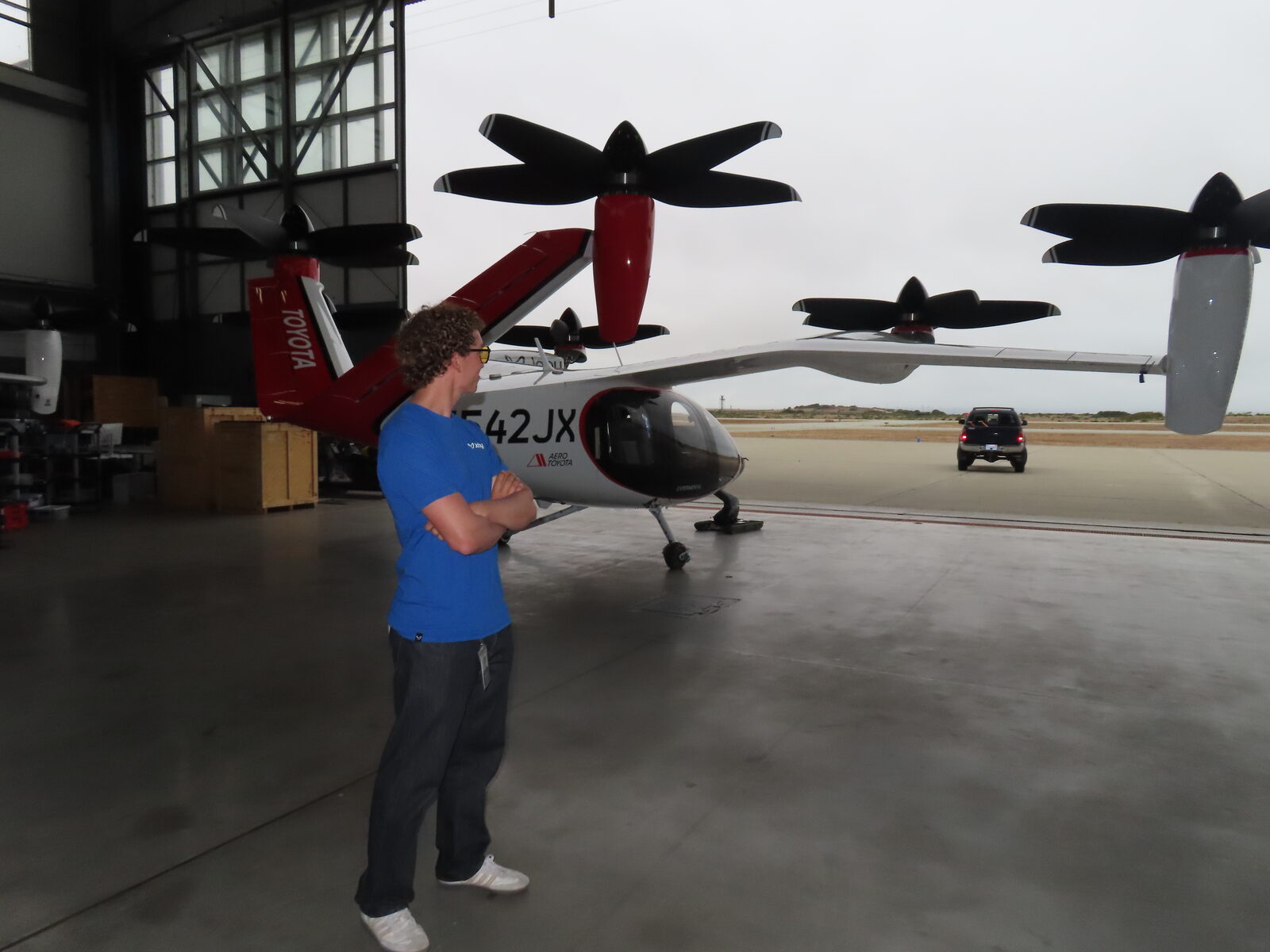
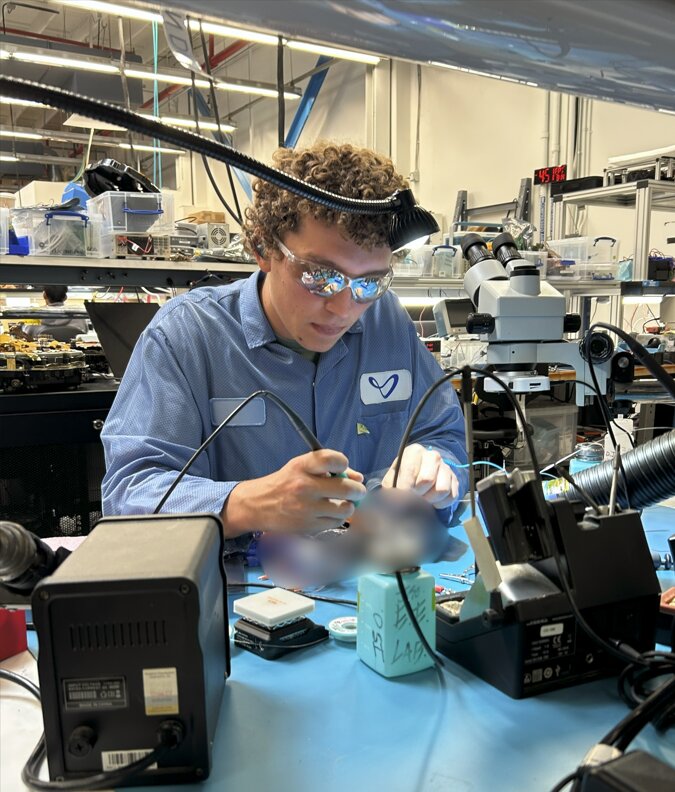
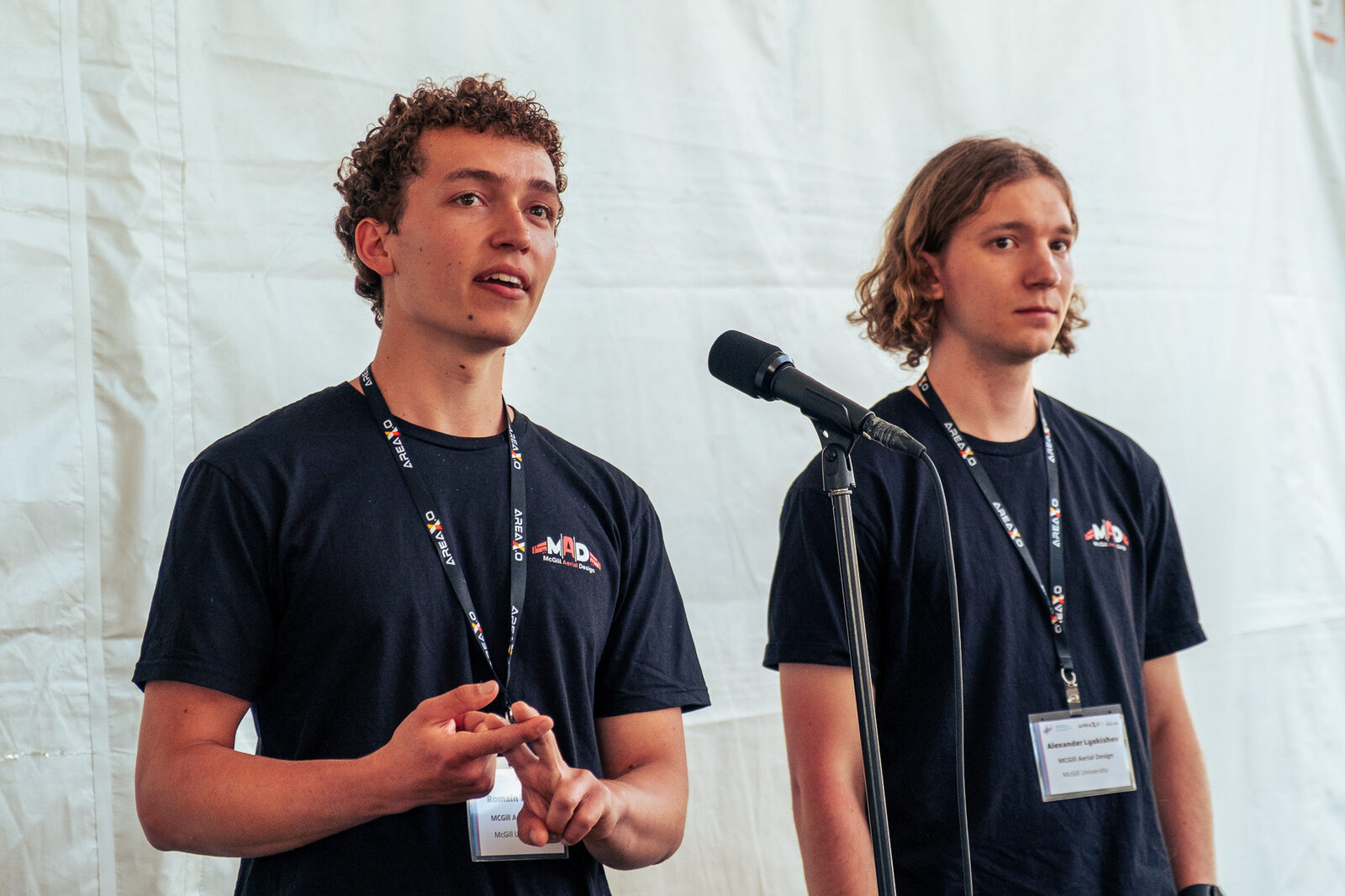
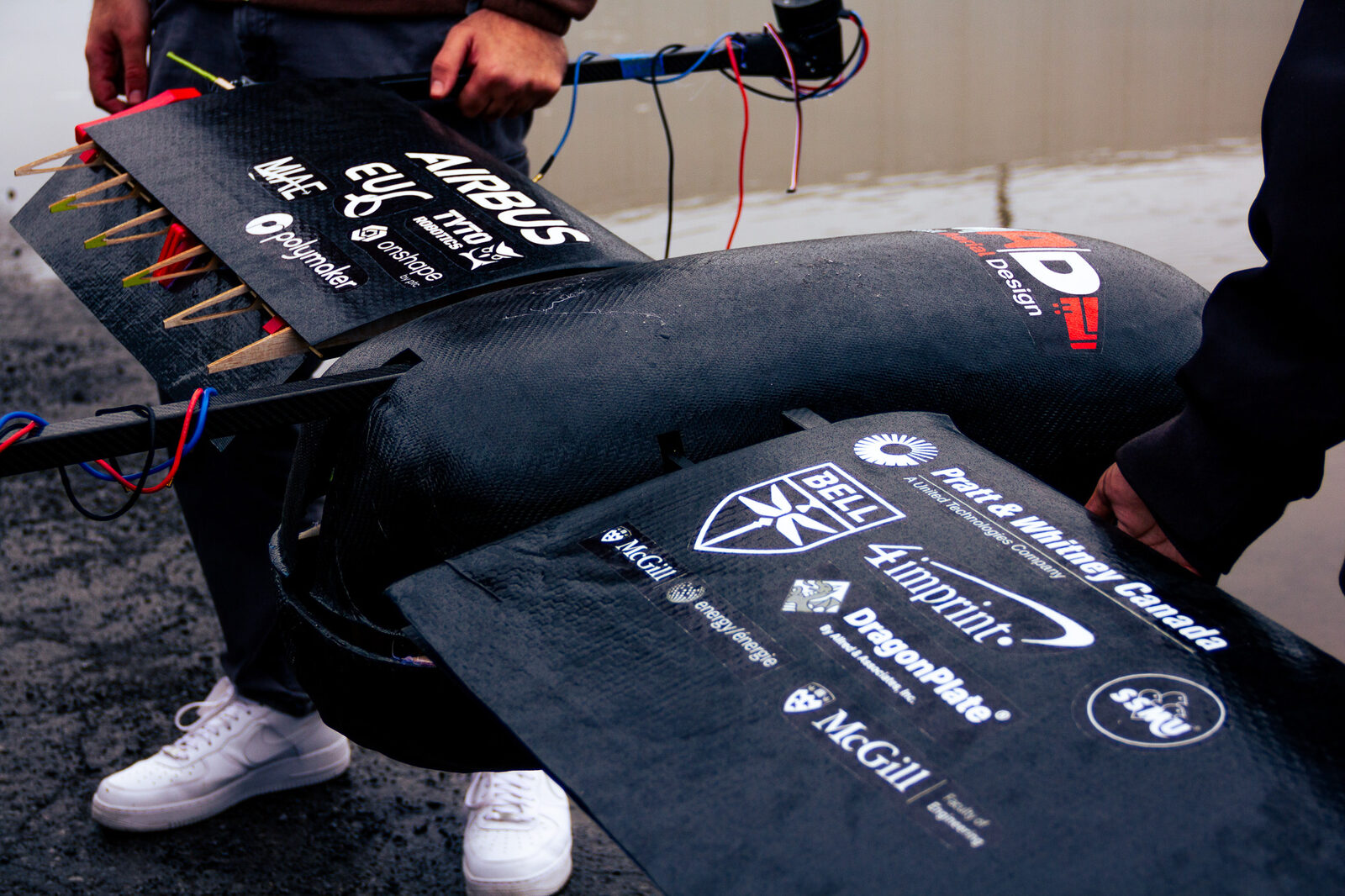
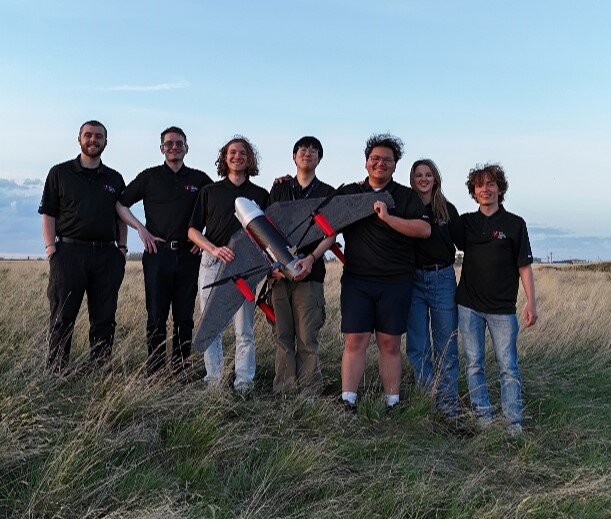
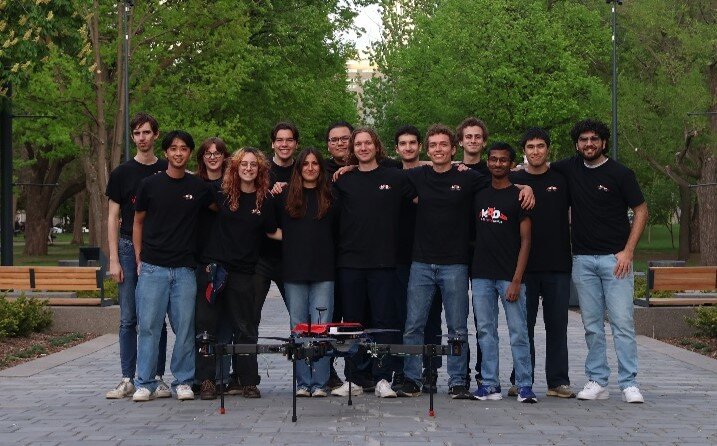
McGill Aerial Design (left) has run the whole time, alongside both internships (right) — click any entry for the full story.
PresentSept 2023202420252026
Joby Aviation
June → August 2026San Carlos, CaliforniaMechanical Design Engineering Intern — Inverter team
This past summer I interned on the inverter mechanical design team at Joby's powertrain production facility in San Carlos. In this role, I was given complete ownership of the DC link capacitor assembly in the next generation inverter. Across just 3 months I brought my own design from 1st prototype, through electrical and thermal testing, and into the start of supplier production. Over the summer, I developed proficiency in CATIA 3D experience, LT Spice, and ANSYS Q3D electronics desktop as well as developing my own 2D thermal simulation tool.
In building my prototypes I got hands on with laser welding, resistance welding, soldering, milling, sheet metal manufacturing, injection molding, FDM/SLA 3D printing, high voltage power electronics, and electrical testing. As my assembly goes into production it should significantly simplify manufacturing and improve the thermal performance of the Joby S4 inverter. To top it all off, on my last day I was able to push high voltage, high current through a next generation inverter I assembled myself with a DC link capacitor bank I both designed and built myself. Seeing the inverter's AC sine wave output was truly gratifying.
Alton Aviation Consultancy
June → August 2025New York City, New YorkAssociate Intern — Aircraft Financial & Technical Services
I spent Summer 2025 back home interning for Alton Aviation, a specialized aviation consulting firm. Throughout my summer I supported the global maintenance forecasting team on projects involving the world's largest aircraft leasing companies and airlines. This involved integrating technical specification sheets, maintenance reports, and lease details into a cash flow model to forecast maintenance events and costs and help clients appraise and optimize aircraft asset value.
Beyond client work, my internship project was to improve the proprietary aircraft maintenance forecasting model using VBA in Excel as advised by the senior leadership team. The design requirements included automating the export functionality to improve the consistency, professionalism, and expediency of the client deliverables, as well as streamlining the model workflow, and increasing the analytical capabilities provided for the maintenance forecasting team.
McGill Aerial Design Team
September 2023 – April 2024Montreal, QuebecPropulsion Member
Fresh into my first year at McGill, I joined McGill Aerial Design on the propulsion team, responsible for selecting and mounting motors and propellors. As a new member, I quickly learned eCalc, an online propulsion simulation tool, that I used to simulate the performance of various motor and propellor combinations for our flying wing aircraft. This allowed me to select a new propellor/motor configuration with 49% less current draw for the same thrust compared to the previous year. From here, I also designed the motor mounts for the wing-mounted propulsion units using SolidWorks and NX, and manufactured them using dremels and drills.
I was also heavily involved in our custom motor test stand project, building a mount for the motors on the force transducer and designing an Arduino-based testing system with 6 sensors for measuring thrust, vibration, RPM, temperature, voltage, and current.
Alongside my role on the team, I also won 1st place this year at our team's case competition with my forest fire fighting drone solution for controlled burns and forest reseeding.
McGill Aerial Design Team
May 2024 – April 2025Montreal, QuebecPayload Lead & Team Safety Officer
In my second year on the team, I took on two roles: Payload Lead and Team Safety Officer.
As Payload Lead, I led a team of 4 members in an 8-month project to build an aerial water refueling and dispensing system. The project involved evaluating different designs, building and testing prototypes, extensive CAD design and 3D printing for the water tank, FEA on the screw attachments, and more. To learn more about it, check out Aerial Water Payload System.
As Team Safety Officer, I was responsible for ensuring team safety across 50+ members. This involved coordinating with external directors, logging and tracking chemicals in MyLabs, and ensuring proper PPE was worn in the workshop.
I also completed the Payload project early this year, and moved over to Aerostructures to help them design our Tail-Sitter's landing legs. Read more about that project here: Tail-Sitter.
Finally, this year was capped off with my first competition. We attended AEAC 2025 in Medicine Hat, Alberta. I co-presented our team's business pitch, earning us 2nd/15 in the Bidder's Presentation Competition. The actual flying had its ups and downs (literally), and we crashed and rebuilt several times. Many lessons were learned which would help us improve over the years to come.
McGill Aerial Design Team
May 2025 – April 2026Montreal, QuebecAerostructures Director
In my 3rd year, I picked up my biggest leadership challenge yet: directing the Aerostructures subteam which had now grown to 7 leads and 42 members (when I joined 2 years ago, the whole team was <30 people!). My first big project was leading us in a 3 month design sprint to design and manufacture a subscale tilt-rotor prototype. It was an ambitious project, with a 1.6 meter wingspan, and aimed to be our team's first ever pre-winter test flight (once snow sets in, in November, we can't test again until April). The project was a success as we got it done on time and learned a lot about what not to do when designing tilt-rotors. Read more about it here: Subscale Tilt-Rotor.
After the completion of this project, we set out to build the main drone, our 2.6 meter wingspan Tilt-Rotor. That project involved lots of aerodynamic and structural design, CNC molds, and 14 carbon fiber layups. During this time, I also oversaw our payload development which was being done under the Aerostructures subteam. To learn more about Tilt-Rotor, read about it here: Tilt-Rotor.
With 3 months left to go, we mad a major design decision, pivoting to MegaQuad as our main competition drone. This decision primarily stemmed from our lagging timelines which wouldn't allow us to complete the extensive testing we desired before competition. Thus, I oversaw the simultaneous development of both projects. To read more about MegaQaud, check out the projects page: MegaQuad.
Lastly, we capped off the year with another competition, AEAC 2026 in Ottawa at Area X.O. Again, I co-presented our team's Bidder's Presentation. Unfortunately, the competition organizers didn't present the results, but we felt even better about it than last year. As for the competition, our extensive testing seemed to pay off as MegaQuad lifted off as one of the only teams to even attempt the ladder lifting payload task. However, our high spirits were quickly crushed as vibrations caused a motor to detach and our beloved MegaQuad fell 30 meters from the sky. Not a team to be discouraged, we drove back to Montreal to get parts, and pulled an all-nighter building an all new drone and payload, dubbed MiniQuad. Her maiden flight would be our competition run, and unfortunately the lack of testing there led to a motor issue which we couldn't resolve on the flight line. Another even more promising year, with so many lessons learned, we were sure the next one would be ours!
McGill Aerial Design Team
May 2026 – PresentMontreal, QuebecCo-Captain
As Co-Captain of McGill Aerial Design, I lead a 101-person design team at McGill specialized in medium-sized eVTOLs. Each year we build 2-3 drones weighing up to 15 kg each with payloads, designed to perform tasks at Aerial Evolutions Association Canada's University Drone Competition. In our first year, 2025, we placed 2nd in the investor pitch presentation and won the perseverance award for our performance with our unique tail-sitter design. This past year, 2026, saw us building 3 large-scale drones: a 5 kg subscale fixed-wing tilt-rotor, a 13 kg fixed-wing tilt-rotor, and an 11 kg efficient "MegaQuad" quadcopter.
As Co-Captain I manage our team's $60k yearly budget, maintain and promote relations with sponsors, and oversee and review technical designs from our 3 main subteams: avionics, power, and aerostructures.
My previous roles on the team have included Propulsion Member, Payload Lead, Safety Officer, and Aerostructures Team Director.